
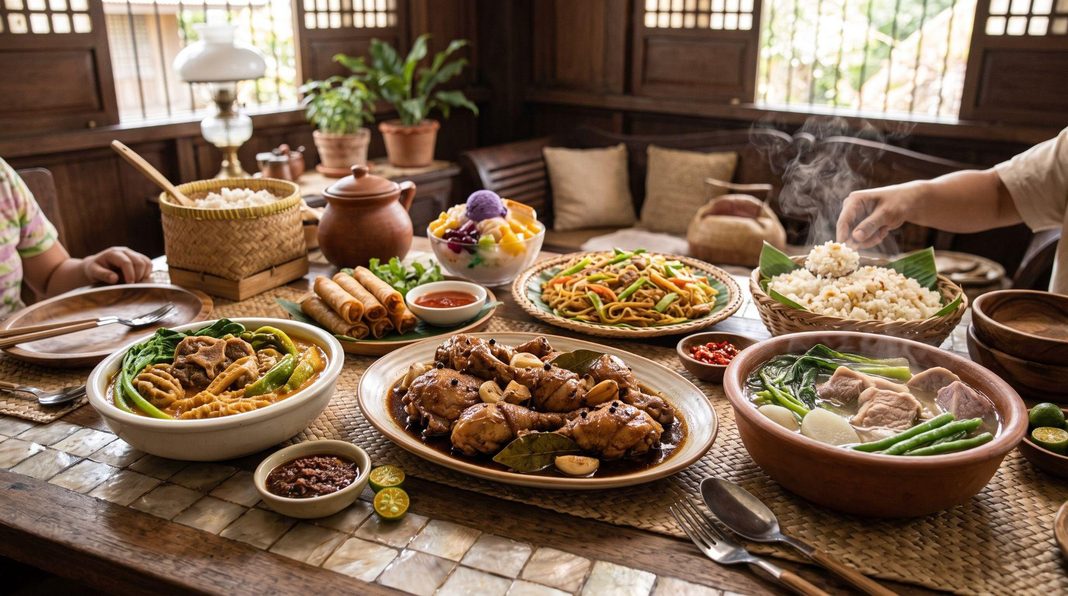
Filipino food tells stories that go beyond what's on the plate. Family recipes, regional specialties, festive dishes, and everyday comfort foods all offer a glimpse into how Filipinos live, celebrate, and connect with one another.
From a bowl of sinigang shared at home to lechon served during a fiesta, traditional Filipino foods are closely tied to family, community, and local traditions. With influences from different cultures woven into generations of Filipino cooking, each dish has its own story to tell.
This guide explores some of the country's beloved dishes and the traditions, history, and regional flavors behind them.
Quick Answer: What are Traditional Filipino Foods?
Traditional Filipino foods are dishes and food preparations passed down through generations that reflect the Philippines’ history, regional diversity, local ingredients, and cultural traditions. Popular examples include adobo, sinigang, lechon, kare-kare, lumpia, pancit, tinola, and more. Filipino cuisine also reflects Chinese, Spanish, American, and Southeast Asian influences that were adapted to local ingredients and Filipino tastes.
What’s Inside
- Traditional Filipino Foods That Represent Filipino Culture
- Traditional Filipino Soups and Comfort Foods
- Traditional Filipino Vegetable and Coconut-Based Dishes
- Traditional Filipino Seafood and Coastal Dishes
- Traditional Filipino Rice and Noodle Dishes
- Traditional Filipino Snacks and Street Foods
- Traditional Filipino Foods from Different Regions
- How Filipino Food Traditions Reflect History
- Why Traditional Filipino Foods Matter
- Frequently Asked Questions About Traditional Filipino Foods
Traditional Filipino Foods That Represent Filipino Culture
Several dishes have become recognizable symbols of Filipino cuisine. While recipes can differ from one household or region to another, these foods show how cooking has become part of the country’s cultural identity.
Adobo: A Filipino Household Staple
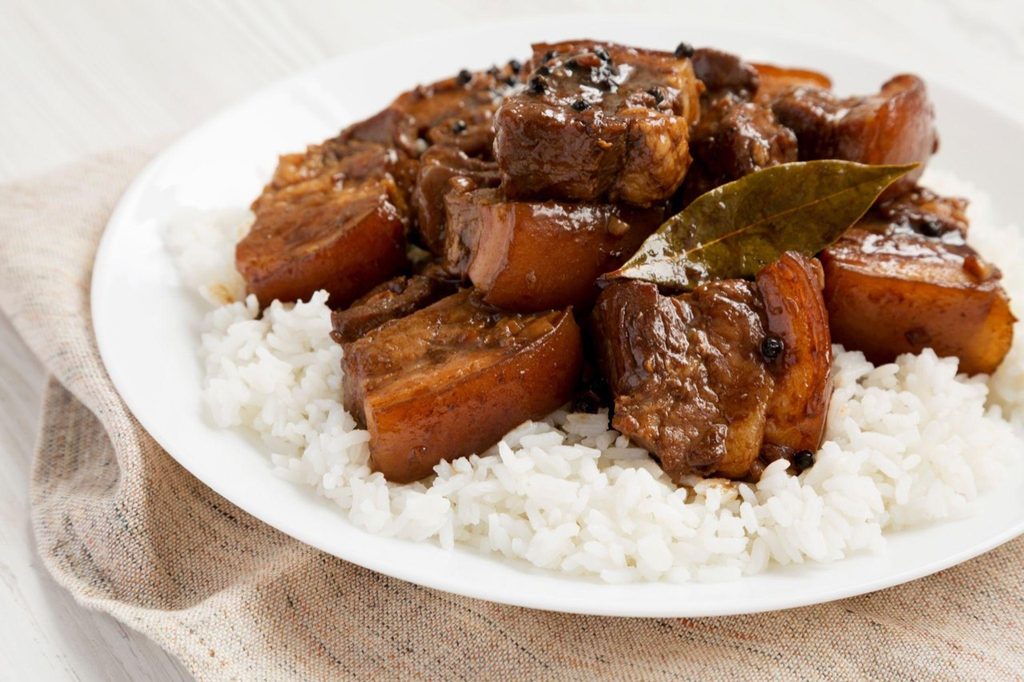
Adobo is one of those dishes that almost every Filipino family has its own way of making. It is also one of the best Filipino dishes for satisfying a hearty appetite, especially when served with a generous helping of steamed rice. Chicken or pork is usually simmered with vinegar, soy sauce, garlic, bay leaves, and peppercorns until tender and flavorful.
There is no single recipe for adobo. Some families prefer it salty and garlicky, while others add more vinegar or a touch of sweetness. These small differences are what make each family’s version special.
Sinigang: Comfort in a Bowl
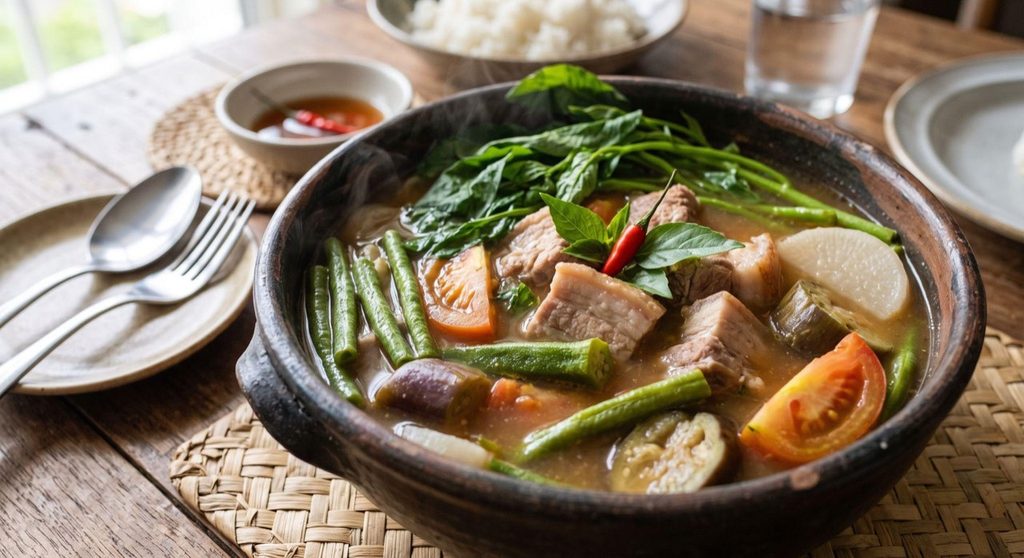
Sinigang is the kind of meal many Filipinos associate with home. Its signature sour broth usually comes from tamarind, while pork, shrimp, fish, or beef can be paired with different vegetables. A hot bowl of sinigang with rice is especially comforting on a rainy day or during a family meal. Its sour broth and hearty ingredients make it a familiar Filipino favorite.
Lechon: A Dish for Special Occasions
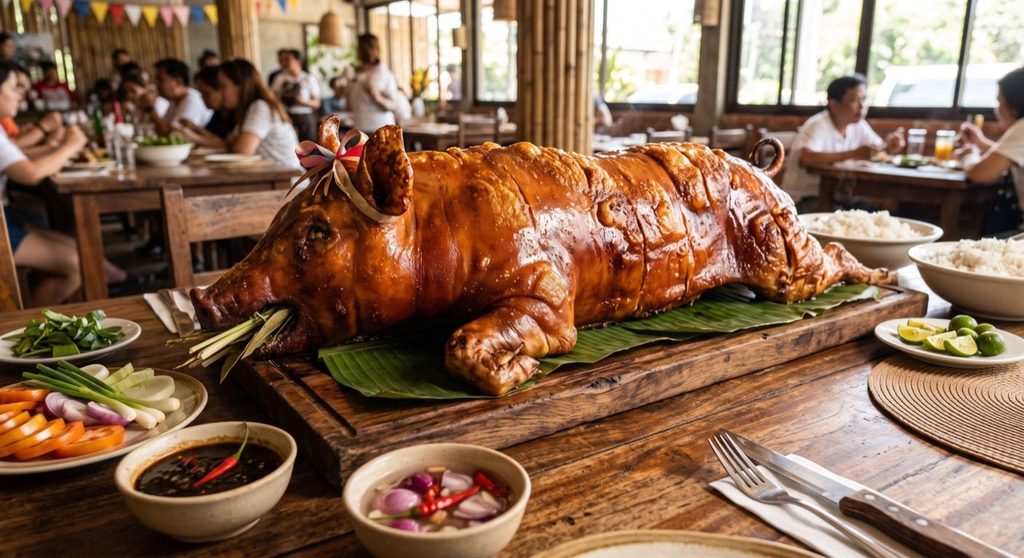
Lechon often takes center stage at Filipino fiestas, weddings, birthdays, Christmas gatherings, and other celebrations. A whole roasted pig is prepared for sharing, making it a symbol of generosity and a festive gathering.
Different regions have their own versions, with Cebu particularly known for its flavorful style of lechon.
Related: These Filipino Restaurants in Cebu Will Make You Come Back for More
Kare-Kare: A Rich and Distinctive Classic
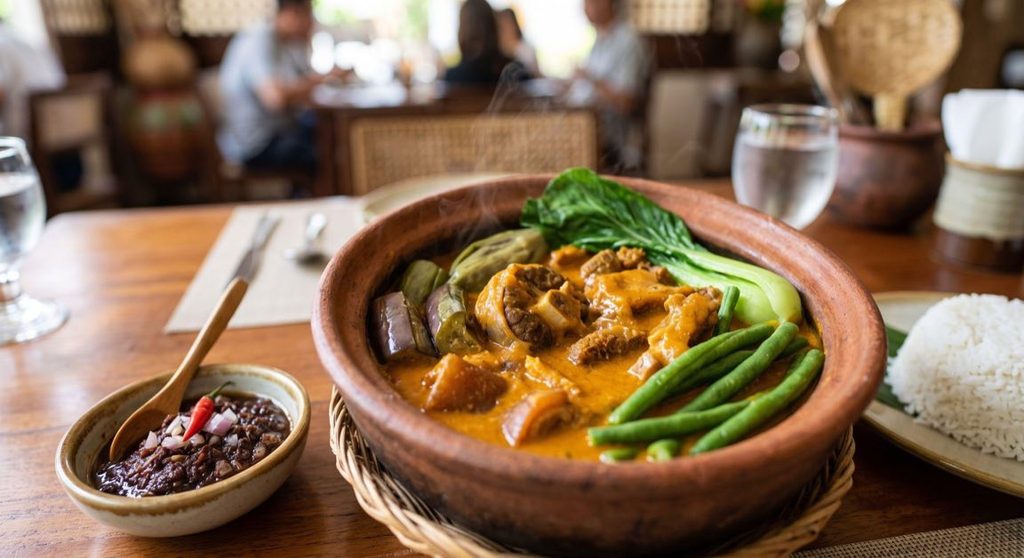
Kare-Kare is a hearty stew known for its thick peanut sauce, meat, and vegetables. It is traditionally served with bagoong, creating a delicious contrast between the creamy sauce and salty condiment. Like many traditional Filipino foods, kare-kare can vary from one family to another, with recipes often reflecting personal tastes and cooking traditions.
Lumpia
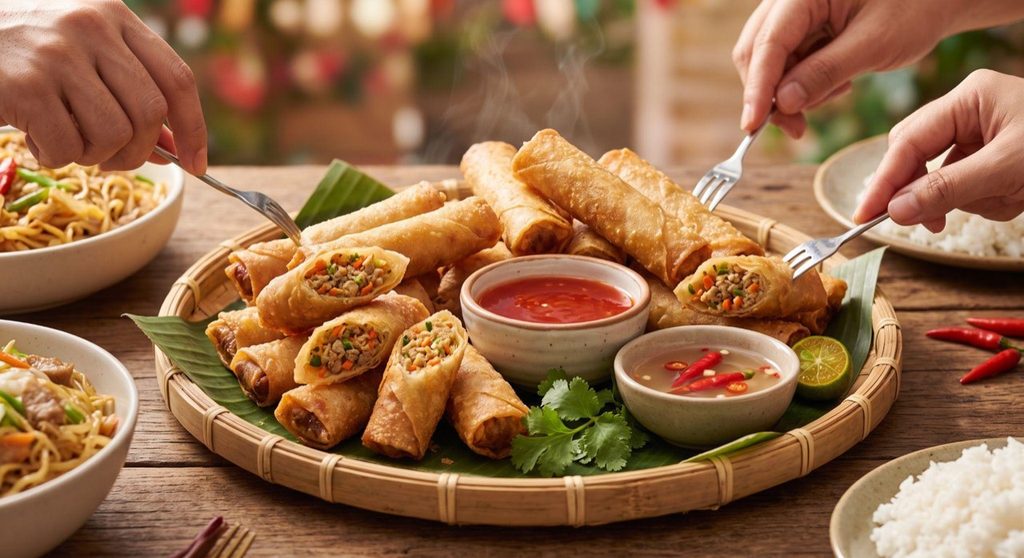
Lumpia is one of the most beloved Filipino foods, and no Filipino party feels quite complete without a plate of crispy lumpia on the table. Its roots can be traced to Chinese culinary traditions, but Filipinos made it their own with local ingredients and flavors. From fresh lumpia to the crunchy fried kind, there is a version for almost every occasion.
Traditional Filipino Soups and Comfort Foods
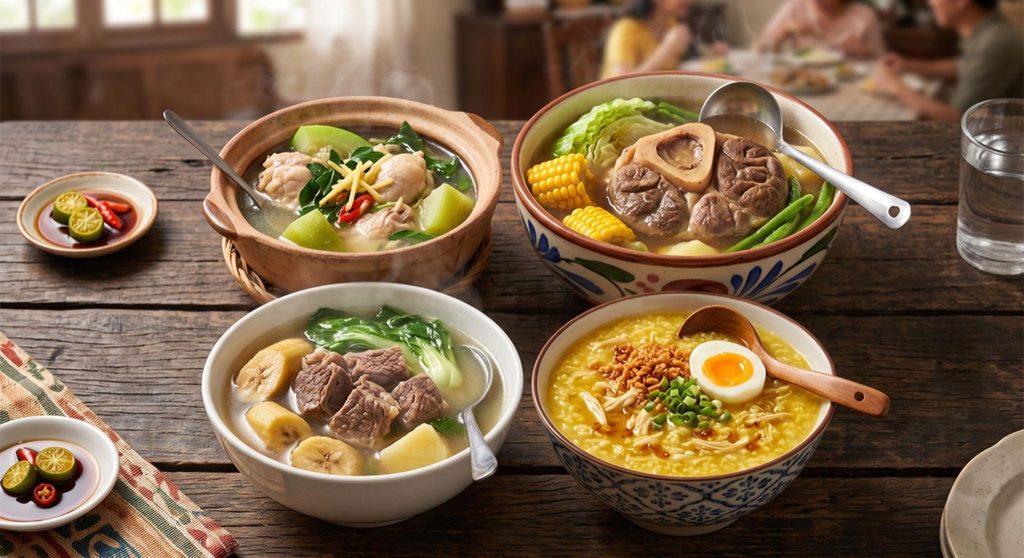
Filipino cooking includes plenty of hearty soups and dishes that are especially popular for family meals.
Tinola
Tinola is a comforting chicken soup made with ginger, green papaya or sayote (chayote), and chili leaves. Many Filipino families turn to this simple, flavorful dish for an easy home-cooked meal, especially when served with warm rice.
Bulalo
Bulalo is a hearty beef soup made with beef shank and bone marrow, usually paired with corn, cabbage, and other vegetables. The rich broth makes it a popular choice in cooler places, roadside stops, and family meals.
Nilaga
Nilaga keeps things simple with beef or pork simmered until tender with vegetables such as cabbage, potatoes, corn, and pechay. Its no-fuss preparation makes it a familiar comfort food on many Filipino dinner tables.
Arroz Caldo
Arroz caldo is a warm rice porridge cooked with chicken, ginger, garlic, and seasonings. A hot bowl is a go-to comfort food during rainy days in the Philippines, often enjoyed for breakfast, merienda, or whenever something warm and filling is needed.
Traditional Filipino Vegetable and Coconut-Based Dishes
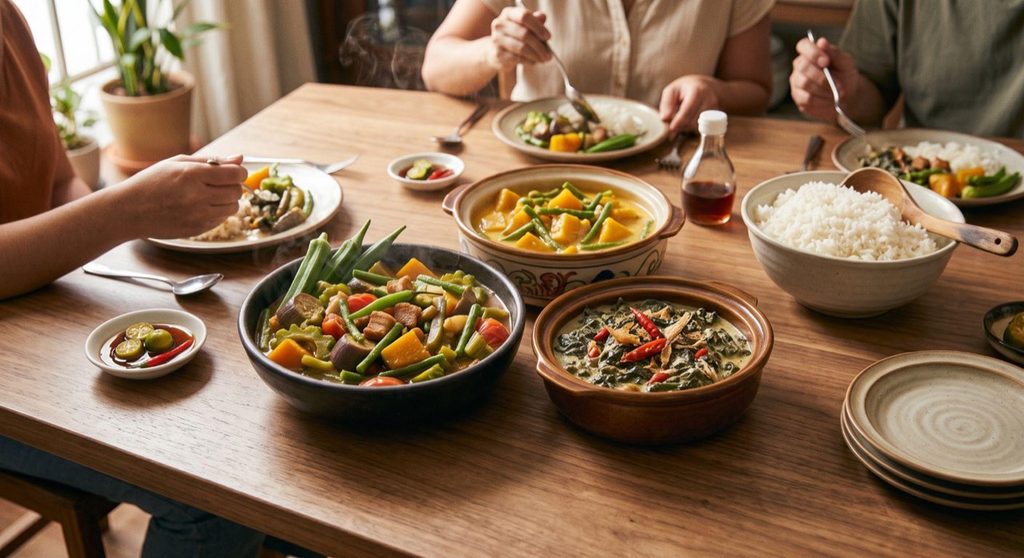
Vegetables and coconut milk play an important role in many Filipino regional cuisines.
Pinakbet
Pinakbet is a hearty vegetable dish made with ingredients such as bitter melon, eggplant, squash, and okra. Often associated with Ilocano cooking, it gets its savory flavor from fermented fish or shrimp paste. It is a great example of how simple, locally grown vegetables can come together to make a satisfying Filipino meal.
Laing
Laing features dried taro leaves simmered in coconut milk with chili and aromatics. A Bicolano favorite, it brings together the rich creaminess of coconut milk and the kick of chili. The bold combination makes laing a favorite for anyone who enjoys flavorful Filipino food.
Ginataang Kalabasa at Sitaw
Ginataang kalabasa at sitaw combines tender squash and string beans cooked in creamy coconut milk. It is a simple and budget-friendly dish that feels right at a Filipino family dinner, especially when paired with plenty of steamed rice.
Traditional Filipino Seafood and Coastal Dishes

With the Philippines surrounded by water, seafood naturally plays a big role in Filipino food traditions. From simple grilled fish to sour soups and vinegar-cured seafood, these dishes make the most of the country's abundant coastal ingredients.
Sinigang na Hipon
Sinigang na hipon brings together plump shrimp, vegetables, and a flavorful sour broth, often made with tamarind. The combination of tangy soup and fresh seafood makes this a comforting favorite, especially when enjoyed with steaming rice.
Adobong Pusit
Adobong pusit puts a seafood twist on the classic adobo. Squid is cooked with vinegar, soy sauce, garlic, and other seasonings, creating a savory dish with a slightly tangy flavor. Its simple preparation lets the natural taste of the squid shine while giving it the familiar flavors Filipinos love in adobo.
Daing na Bangus
Daing na bangus is milkfish marinated in vinegar, garlic, and spices before being fried. It is commonly served with rice and is a familiar part of Filipino breakfast and home cooking.
Inihaw na Isda
Grilled fish is another simple preparation found throughout the country. Fresh fish is often seasoned with salt or other local ingredients before being grilled over charcoal. The method allows the natural flavor of the seafood to remain the focus.
Traditional Filipino Noodle Dishes
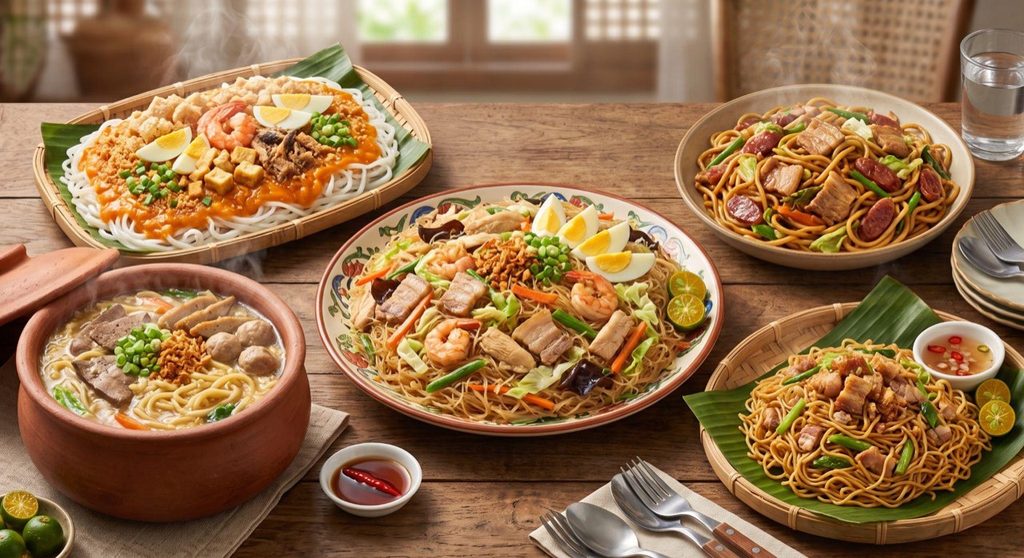
Rice is a staple on Filipino tables, while noodles have become a beloved part of everyday meals, celebrations, and local food traditions.
Pancit Bihon
Pancit bihon uses thin rice noodles stir-fried with vegetables, meat, seafood, and seasonings. It is a familiar sight at Filipino celebrations and family gatherings, especially when a big tray is placed in the middle of the table for everyone to share.
Pancit Canton
Pancit canton uses thicker wheat noodles tossed with vegetables, meat, seafood, and a savory sauce. Its chewy noodles and generous toppings make it a filling choice for lunch, merienda, or a family meal.
Pancit Habhab
Pancit habhab is a specialty from Lucban, Quezon, made with thick noodles stir-fried with meat and vegetables. What makes it memorable is the traditional way of eating it directly from a banana leaf, without utensils.
Sotanghon Guisado
Sotanghon guisado uses glass noodles stir-fried with vegetables, meat, seafood, and savory seasonings. The light, springy noodles make it a popular alternative to heavier pancit varieties and a common addition to Filipino gatherings.
Miki-Bihon
Miki-bihon combines fresh miki noodles with thin rice bihon noodles, along with vegetables, meat, and seafood. The mix of two noodle textures gives this dish a little something extra while keeping the familiar flavors of Filipino pancit.
Traditional Filipino Snacks and Street Foods
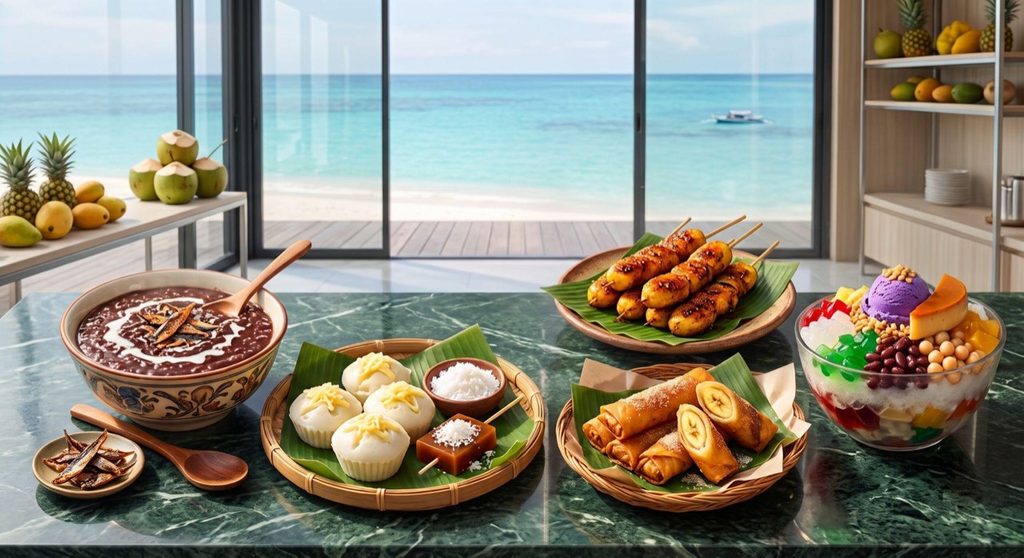
Filipino food traditions extend beyond full meals. Snacks, desserts, and street foods are also part of everyday life, offering simple and familiar flavors that many Filipinos grow up enjoying.
Related: The 22 Most Popular Filipino Street Foods That Will Make You Crave
Turon
Turon is a fried banana spring roll commonly made with saba bananas and jackfruit. The filling is wrapped in a thin wrapper and fried until crisp and caramelized. It is a familiar merienda or afternoon snack and can often be found in local markets and food stalls.
Banana Cue
Banana cue consists of saba bananas coated in caramelized brown sugar and skewered on bamboo sticks. Its simple preparation shows how common local ingredients can be transformed into an inexpensive and satisfying snack.
Halo-Halo
Halo-halo is a popular Filipino dessert made with sweetened fruits, beans, jellies, shaved ice, and evaporated milk, often topped with leche flan, ube, or ice cream.
Its roots are linked to Japanese kakigori, a shaved-ice dessert introduced to the Philippines before World War II. Filipinos adapted it with local ingredients, creating the colorful dessert known today. The name halo-halo, meaning “mix-mix,” refers to combining its ingredients before eating.
Champorado
Champorado is a sweet chocolate rice porridge traditionally made with tablea, or locally produced chocolate tablets. It is commonly served for breakfast or as a snack and may be paired with salty dried fish. That sweet-and-salty combination is a distinctly familiar part of Filipino food culture.
Puto and Kutsinta
Puto is a steamed rice cake that comes in different varieties, while kutsinta has a softer, chewier texture and is often topped with grated coconut. Both are common Filipino snacks and are often enjoyed with coffee or other local refreshments.
Traditional Filipino Foods from Different Regions
One of the best ways to understand traditional dishes in the Philippines is to explore them by region. Local geography, history, ingredients, and cultural communities shape what people cook and eat. Here are some regional examples and their notable dishes.
Ilocano Cuisine
Ilocano cooking is known for bold, savory flavors and the use of vegetables and fermented ingredients.
Some notable dishes include:
- Bagnet – Crispy deep-fried pork belly associated with Ilocos.
- Dinakdakan – A savory pork dish traditionally prepared with various pork parts and a creamy dressing.
- Pinapaitan – A bitter and savory stew made with meat and bile.
- Poqui-poqui – A simple eggplant dish commonly prepared with eggs and tomatoes.
- Pinakbet – A vegetable dish that showcases local produce and fermented flavors.
These dishes demonstrate how Ilocano cuisine makes creative use of local ingredients.
Related: Ilocos Norte Travel Guide: Must-See Spots for Your Bucket List
Bicolano Cuisine
Bicolano food is often associated with coconut milk and chili. Some notable dishes include:
- Bicol Express – Pork simmered in coconut milk with chili and other seasonings. It is one of the region's best-known dishes.
- Laing – Taro leaves cooked in coconut milk with chili and aromatics, creating a rich and flavorful dish.
Together, these dishes showcase the rich, creamy, and spicy flavors commonly associated with Bicolano cooking.
Visayan Cuisine
The Visayas region has a strong seafood tradition, along with distinctive meat and noodle dishes. Some notable examples include:
- Inasal na Manok – Grilled chicken associated with Bacolod, marinated in a flavorful mixture before being cooked over charcoal.
- Kansi – Sour beef soup associated with Iloilo, combining characteristics of bulalo and sinigang.
- Pancit Molo – Dumpling soup from Iloilo influenced by Chinese culinary traditions and adapted into a local specialty.
These dishes highlight the region's diverse ingredients and the influence of its coastal and trading communities.
Mindanao Cuisine
Mindanao's food culture reflects the diversity of its Indigenous and Muslim Filipino communities. Notable dishes include:
- Pianggang Manok – Tausug grilled chicken prepared with burnt coconut and aromatic spices.
- Kinilaw – Fresh seafood cured in vinegar and commonly prepared with ingredients such as ginger, onion, and chili.
These dishes offer a broader look at Filipino dishes and their history, particularly the regional traditions that may be less familiar outside Mindanao.
How Filipino Food Traditions Reflect History
The history of Filipino cuisine is closely connected to trade, migration, and cultural exchange.
Chinese traders introduced ingredients and culinary practices that eventually became part of local food culture. Spanish colonial influence brought new ingredients, cooking methods, and food practices. American influence later shaped other aspects of Filipino eating habits.
However, Filipino cuisine was not simply copied from other cultures.
Filipinos adapted outside influences to local ingredients and preferences. This process helped create dishes and cooking methods that became part of Filipino identity.
Pancit, for example, reflects Chinese influence but has developed into many distinctly Filipino versions. Other dishes similarly demonstrate how foreign influences were transformed through local cooking traditions.
Why Traditional Filipino Foods Matter
Traditional Filipino foods are more than recipes passed down through generations. They bring families together, turn gatherings into celebrations, and reflect the history and regional diversity of the Philippines. Many dishes are learned at home, with grandparents and parents passing down recipes through shared cooking and family meals. Even the familiar invitation of “Kain tayo” shows how food is part of Filipino hospitality and community.
From adobo and sinigang to regional favorites such as bagnet, laing, inasal, and kinilaw, each dish carries a story about the people and places behind Filipino cuisine. As these recipes continue to evolve, keeping their traditions alive helps preserve Filipino heritage while allowing future generations to enjoy and share the flavors of Filipino food and culture.
Frequently Asked Questions About Traditional Filipino Foods
What are traditional Filipino foods?
Traditional Filipino foods are dishes and food preparations that have developed within Filipino communities and have been passed down through generations. Popular examples include adobo, sinigang, lechon, kare-kare, and many regional specialties.
What Filipino food best represents Filipino culture?
There is no single dish that represents all of Filipino culture. Adobo is often recognized as a Filipino staple, while dishes such as sinigang, lechon, kare-kare, and regional specialties each highlight different aspects of Filipino food traditions.
How does food reflect Filipino culture?
Food reflects Filipino culture through family recipes, hospitality, communal meals, celebrations, local ingredients, and cooking traditions. Filipino cuisine also shows how different historical and cultural influences were adapted to local tastes.
Why is traditional Filipino food important?
Traditional Filipino food helps preserve cultural identity and family traditions. Recipes and cooking practices can carry stories about a community's history, resources, celebrations, and relationships.
What are examples of traditional dishes in the Philippines?
Examples include adobo, sinigang, lechon, kare-kare, tinola, pancit, lumpia, kinilaw, and many regional dishes. Recipes and ingredients often vary depending on the location and household.