

Work-life balance sounds great in theory—until deadlines pile up, notifications don’t stop, and “rest” feels like something you’ll get to later. The good news? You don’t need a dramatic lifestyle overhaul to feel better. Small, intentional changes can go a long way.
This guide focuses on healthy habits for work-life balance that you can realistically start today. No complicated systems, no toxic productivity talk—just practical habits that support your energy, focus, and mental health at work.
What’s Inside
- Why Work-Life Balance Feels Hard (And Why Habits Matter)
- Start With Clear (and Realistic) Boundaries
- Build Stress Management Habits You Can Maintain
- Improve Your Daily Routine Without Overloading It
- Support Your Mental Health at Work Daily
- Protect Your Energy Outside of Work
- Learn to Say No Without Guilt
- Create a Simple End-of-Day Reset Habit
- Make Balance Sustainable (Not Perfect)
- Key Takeaway: Start Small with Healthy Habits for Better Work-Life Balance
Why Work-Life Balance Feels Hard (And Why Habits Matter)
Before diving into tips, it helps to understand why balance feels so out of reach.
Modern work blurs boundaries. Emails after hours, flexible schedules that turn into always-on schedules, and the pressure to stay productive can slowly wear you down. Over time, this leads to stress, burnout, and declining motivation.
That’s where habits come in. Healthy habits to improve work-life balance act as anchors. They create structure, protect your time, and help you reset—physically and mentally—even when work gets demanding.
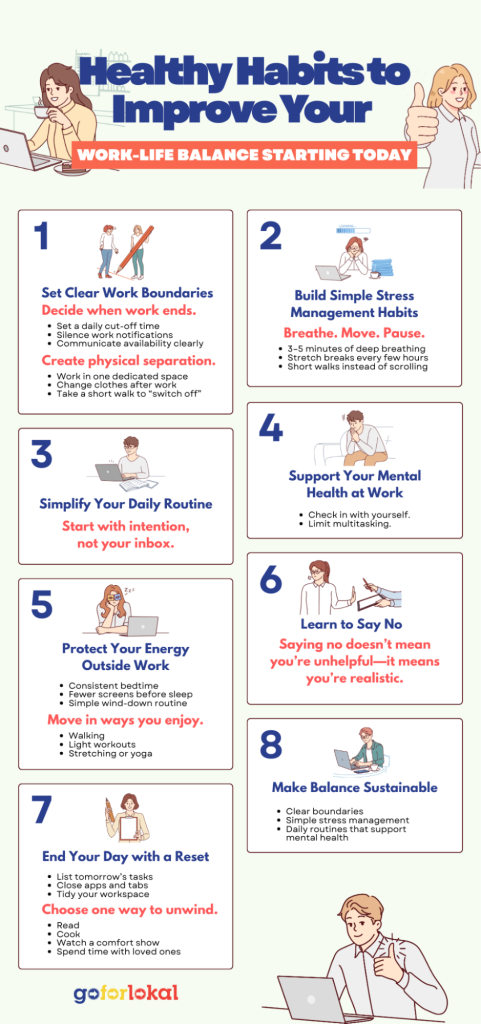
1. Start With Clear (and Realistic) Boundaries
Set a “Work Ends Here” Rule
One of the most effective work-life balance tips is also the simplest: decide when work stops.
This doesn’t mean you’ll never work late again. It means you’re intentional about it.
- Set a daily cut-off time for emails or tasks
- Silence work notifications after hours
- Communicate availability clearly to teammates or clients
Keep in mind that boundaries protect your mental space. Without them, work slowly expands into everything.
Create Physical Separation (Even at Home)
If you work from home, physical cues matter.
- Work from a specific spot, not your bed
- Change clothes after work to signal “off mode”
- Step outside or take a short walk to mark the end of the day
These small actions help your brain switch gears and support mental health at work by preventing constant “work mode.”
2. Build Stress Management Habits You Can Maintain
Stress won’t disappear, but how you handle it makes a difference.
Breathe, Move, Pause
You don’t need hour-long meditation sessions to benefit from stress relief.
Try:
- 3–5 minutes of deep breathing between tasks
- Short stretching breaks every few hours
- A quick walk during lunch instead of scrolling
These stress management habits reduce tension and help reset your focus without disrupting your schedule.
Stop Treating Breaks as a Reward
Breaks aren’t something you earn after exhaustion—they’re what help you stay functional.
Schedule them like meetings:
- Short breaks every 60–90 minutes
- One proper lunch break away from your screen
- Micro-pauses to rest your eyes and shoulders
Consistent breaks improve productivity and protect your energy.
3. Improve Your Daily Routine Without Overloading It
Start the Day With Intention (Not Your Inbox)
How you begin your morning shapes the rest of your day.
Instead of immediately checking messages:
- Drink water first
- Review your top 3 priorities
- Take 5 minutes to plan, not react
This habit supports healthy habits for work-life balance because it keeps your day from feeling chaotic right from the start.
Create a “Good Enough” To-Do List
Overloaded to-do lists create stress before you even begin.
Aim for:
- 3 major tasks
- A few small, flexible tasks
- Clear stopping points
You don’t need to do everything—just what actually matters.
4. Support Your Mental Health at Work Daily
Normalize Checking in With Yourself
Mental health isn’t just about avoiding breakdowns. It’s about noticing early signs of strain.
Ask yourself:
- Am I constantly exhausted?
- Do I feel irritated or disengaged?
- Am I struggling to focus?
These signals matter. Adjusting your workload, asking for help, or taking time off isn’t a weakness—it’s maintenance.
Limit Multitasking (It’s Draining You)
Multitasking may seem like you’re being productive, doing all sorts of things at once, but it actually increases stress and mental fatigue—eventually slowing you down.
Try:
- Single-tasking for focused work blocks
- Turning off non-essential notifications
- Finishing one task before starting another
This simple shift improves clarity and reduces burnout.
5. Protect Your Energy Outside of Work
Sleep Is Not Optional
Lack of sleep affects focus, mood, and resilience.
Basic sleep-supporting habits:
- Keep a consistent bedtime
- Avoid screens at least 30 minutes before sleep
- Create a simple nighttime wind-down routine
Good sleep strengthens your ability to handle stress the next day.
Move Your Body in a Way That Feels Good
Exercise doesn’t have to be intense to be effective.
Choose movement you’ll actually stick with:
- Walking
- Light workouts
- Stretching or yoga
Movement supports both physical health and mental health at work, especially when your job involves long hours of sitting.
Related: 7 Best Fitness and Dance Studios in Metro Manila
6. Learn to Say No Without Guilt
Overcommitting is one of the fastest ways to lose balance.
Saying no doesn’t mean you’re unhelpful—it means you’re realistic.
Try:
- “I can’t take this on right now.”
- “Let’s revisit this next week.”
- “I need to prioritize my current workload.”
Protecting your time is a key part of healthy habits to improve work-life balance.
7. Create a Simple End-of-Day Reset Habit
Do a Mental “Shutdown”
Before ending work:
- Write down unfinished tasks for tomorrow
- Close tabs and apps
- Tidy your workspace
This clears mental clutter and makes it easier to relax afterward.
Choose One Thing That Helps You Unwind
Do not leave resting up to chance.
Examples:
- Reading
- Cooking
- Watching a comfort show
- Spending time with family or friends
These moments help you disconnect and recharge.
8. Make Balance Sustainable (Not Perfect)
Work-life balance isn’t about equal hours every day. Some days will lean more toward work, others toward life—and that’s okay.
What matters is having habits that bring you back to center.
The most effective work-life balance tips are the ones you can maintain without pressure:
- Consistent boundaries
- Simple stress management habits
- Daily routines that support your mental health
Key Takeaway: Start Small with Healthy Habits for Better Work-Life Balance
You don’t need to change everything at once. Pick one or two habits from this list and commit to them for a week.
Healthy habits build momentum. Over time, those small choices add up—less stress, more energy, and a healthier relationship with work.
If you’re looking for healthy habits for work-life balance, remember this: balance isn’t found. It’s built—one realistic habit at a time.