
Working remotely has become a normal part of life for many professionals in the Philippines. In fact, industry data shows that more than 1.5 million Filipinos are actively working in remote or freelance roles, while 91% of Filipino workers say they prefer remote or hybrid work arrangements.
Although working from home offers greater flexibility and eliminates the daily commute, it also comes with unique challenges. Household responsibilities, noisy surroundings, and constant digital distractions can make it difficult to stay focused and productive throughout the day.
The good news is that productivity isn’t about working longer hours. It’s about building sustainable habits and creating routines that help you work smarter. These work from home productivity tips can help busy Filipinos stay organized, manage their time more effectively, and maintain a healthier work-life balance, whether they’re working remotely full-time, freelancing, or following a hybrid schedule.
Related: Work from Home? Here’s How to Set Boundaries and Stay Balanced
Quick Summary: Work From Home Productivity Tips for Busy Filipinos
Busy professionals can stay productive while working remotely by creating consistent routines, setting up dedicated workspaces, prioritizing high-impact tasks, and setting clear boundaries. These work from home productivity tips help Filipino remote workers improve daily focus, manage time efficiently, and maintain a healthy work-life balance—whether working full-time or in a hybrid setup.
What’s Inside
- Why Productivity Matters When Working From Home
- Start Every Day With a Simple Routine
- Create a Dedicated Workspace
- Plan Your Most Important Tasks First
- Reduce Digital Distractions
- Use the Pomodoro Technique
- Set Clear Work Hours
- Keep Your Workspace Organized
- Stay Connected With Your Team
- Learn to Say No to Multitasking
- Take Care of Your Physical Health
- Invest in Reliable Technology
- Review Your Progress Every Week
- Final Thoughts on Work From Home Productivity Tips
Why Productivity Matters When Working From Home
Remote work offers flexibility, but flexibility can sometimes blur the line between work and personal life. Without a structured environment, it’s easy to procrastinate, multitask excessively, or work beyond regular hours.
Following proven productivity tips for remote workers can help:
- Improve concentration
- Complete tasks faster
- Reduce unnecessary stress
- Prevent burnout
- Maintain a healthier work-life balance
For many Filipino professionals balancing work, family, and personal responsibilities, small improvements in daily habits often produce the biggest results.
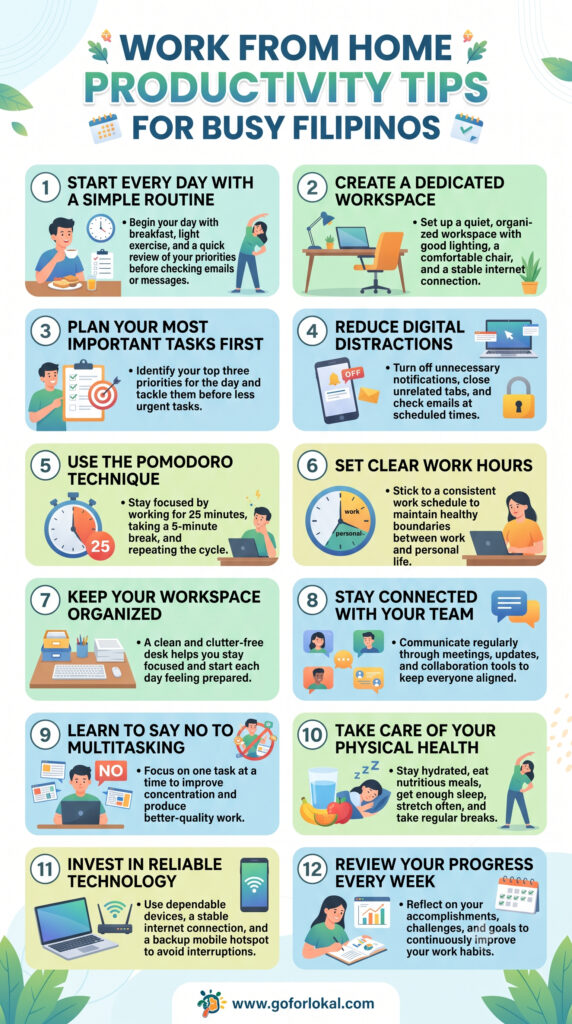
1. Start Every Day With a Simple Routine
A productive day starts before opening emails or joining meetings. Instead of reaching for notifications as soon as you wake up, take a few minutes to prepare mentally and physically for the day ahead. Establishing a consistent morning routine helps signal that it’s time to focus, making it easier to transition into work mode.
A simple morning routine doesn’t have to be complicated. It can include activities like:
- Eating a healthy breakfast
- Taking a short walk or doing light stretches
- Reviewing your priorities for the day
- Preparing coffee or a glass of water
- Tidying and organizing your workspace
Starting work at the same time each day also helps build consistency. Over time, this habit trains your brain to shift into a productive mindset more quickly, allowing you to begin work with greater focus and less resistance.
2. Create a Dedicated Workspace
One of the most effective work from home productivity tips for Filipinos is creating a dedicated workspace that separates professional responsibilities from personal life. While not everyone has the luxury of a home office, setting up a designated work area can significantly improve concentration and reduce distractions.
A quiet corner with good lighting, a comfortable chair, a stable internet connection, and minimal household interruptions is often enough to create an environment that supports productivity. Even a small, organized desk can establish a mental boundary that makes it easier to switch into work mode and stay focused throughout the day.
3. Plan Your Most Important Tasks First
It’s easy to feel overwhelmed when faced with a long to-do list. Instead of trying to accomplish everything at once, identify the three most important tasks that need to be completed for the day. Prioritizing high-impact work ensures that your most valuable responsibilities receive your full attention while your energy and focus are at their highest.
Many remote professionals use proven time management techniques to stay organized, such as time blocking, priority lists, the Eisenhower Matrix, or the 80/20 Principle (Pareto Principle). These methods can help organize workloads more effectively, but the key is choosing a system that fits your work style. Completing your most important tasks first builds momentum, reduces stress, and makes the rest of the day’s workload feel more manageable.
4. Reduce Digital Distractions
Digital distractions can quickly break your focus, especially when notifications constantly appear throughout the day. Even brief interruptions can make it harder to regain concentration, causing simple tasks to take longer than necessary. Creating a distraction-free work environment allows you to stay focused and complete tasks more efficiently.
To minimize interruptions during work hours, consider these simple habits:
- Turn off unnecessary app notifications.
- Close browser tabs that aren’t related to your current task.
- Silence or log out of social media while working.
- Enable Focus Mode or Do Not Disturb on your devices.
Small changes like these can have a noticeable impact on your productivity. One of the most practical remote work tips in the Philippines is to set dedicated times for checking emails instead of responding to every notification as soon as it arrives. This helps you stay focused on meaningful work while still keeping up with important messages.
5. Use the Pomodoro Technique
Working for several hours without taking breaks may seem productive, but it often leads to mental fatigue and reduced concentration. The Pomodoro Technique is a simple time management method that encourages focused work sessions followed by short breaks, making it easier to maintain energy throughout the day.
The traditional Pomodoro cycle looks like this:
- Work for 25 minutes.
- Take a 5-minute break.
- Repeat the cycle four times.
- After the fourth session, take a longer break of 15 to 30 minutes.
This technique helps prevent burnout while making large projects feel more manageable. If a 25-minute session doesn’t match your work style, adjust the timing to fit your workflow. The goal is to maintain consistent focus while giving your mind regular opportunities to recharge.
6. Set Clear Work Hours
One of the biggest challenges of working remotely is knowing when to stop. Without a daily commute, work and personal time can easily overlap. It’s common to reply to emails or finish tasks long after the workday should have ended.
Setting clear work hours helps create healthy boundaries. It allows you to stay focused during work hours while making time to rest once the day is over. This habit can also reduce burnout, improve work-life balance, and prevent unnecessary overtime.
If you work with a team, let them know your usual working hours. Clear expectations make communication smoother and help everyone respect each other’s time.
Related: 8 Healthy Habits to Improve Your Work-Life Balance Starting Today
7. Keep Your Workspace Organized
A clean workspace can make it easier to stay focused. When your desk is organized, you spend less time looking for things and more time getting work done. It also creates a more comfortable environment that helps you stay motivated throughout the day.
Take a few minutes at the end of each workday to organize your documents, tidy your desk, and charge your devices. Starting the next morning with a clean workspace can help you get into work mode faster and feel more prepared for the day ahead.
8. Stay Connected With Your Team
Working from home doesn’t mean working in isolation. Regular communication keeps everyone aligned, reduces misunderstandings, and helps projects move forward more efficiently. Staying connected also builds stronger relationships with colleagues, even when you’re not sharing the same office.
Simple ways to maintain effective communication include:
- Participating in daily check-ins
- Attending weekly team meetings
- Sharing quick progress updates
- Using project management and collaboration tools
Consistent communication improves teamwork and accountability while ensuring everyone stays informed about priorities, deadlines, and project updates.
9. Learn to Say No to Multitasking
Many people think multitasking helps them get more done. In reality, constantly switching between tasks can slow you down and make it harder to concentrate.
Instead, focus on one task at a time. Finish what you’re working on before moving to the next task, and set specific times to check emails or messages. This approach helps you stay focused, produce better work, and complete tasks more efficiently.
10. Take Care of Your Physical Health
Your productivity depends on more than just good time management. Taking care of your physical health gives you the energy and focus needed to get through a busy workday.
Simple habits like drinking enough water, eating balanced meals, getting enough sleep, stretching regularly, and taking short walks during breaks can make a big difference. When you feel your best, it’s easier to stay focused and avoid burnout.
11. Invest in Reliable Technology
The right tools can make working from home easier and more efficient. Slow internet or outdated equipment can interrupt your workflow and waste valuable time.
If possible, invest in a reliable laptop, a stable internet connection, or accessories that improve comfort, such as noise-canceling headphones or an ergonomic keyboard. For remote professionals in the Philippines, having a backup internet connection or mobile hotspot can also help prevent missed meetings and unexpected delays.
12. Review Your Progress Every Week
Productivity isn’t just about finishing today’s tasks. Looking back on your week helps you understand what worked well and what could be improved.
Set aside a few minutes at the end of each week to reflect on your progress. Think about the tasks you completed, the challenges you faced, and the habits you want to improve. Small adjustments each week can lead to better productivity over time.
Final Thoughts on Work From Home Productivity Tips
Building better work-from-home habits doesn’t require a complete lifestyle change. Consistent routines, realistic goals, and a well-organized workspace can make a noticeable difference in your productivity over time. Even small improvements, such as limiting distractions or setting clear work hours, can help you stay focused without feeling overwhelmed.
The best work from home productivity tips are the ones that fit your lifestyle and work schedule. Start with one or two strategies, build them into your daily routine, and adjust as your needs change. With the right approach, busy Filipinos can stay focused, maintain a healthy work-life balance, and make the most of every workday, no matter where they work from.
Frequently Asked Questions About Working From Home in the Philippines
How can I stay productive when working from home in the Philippines despite power and internet outages?
To maintain productivity during outages, set up a secondary mobile hotspot (Smart or Globe), connect your Wi-Fi router to an Uninterruptible Power Supply (UPS), and keep power banks charged. Prepare offline tasks, such as content drafting or workflow planning, to keep working through brownouts.
How do I handle household distractions when working with family at home?
Handle family distractions by communicating your exact working hours and using visual cues like noise-canceling headphones or a closed door. Establishing designated breaks and meal times to engage with family helps minimize unannounced interruptions during deep-focus work blocks.
What is the best schedule for Filipinos working night shifts or foreign time zones?
The best night-shift schedule maintains strict consistency by keeping the same sleep and wake times seven days a week. Use blackout curtains and eye masks to maximize daytime sleep quality, and tackle your hardest, highest-energy tasks during the first half of your shift.
How many hours should a remote worker in the Philippines work each day?
Remote workers should aim for a standard 8-hour workday structured around short focus blocks, such as 25-minute Pomodoro sessions. Working past 8 hours regularly decreases overall productivity and significantly increases the risk of remote work burnout.
What are the essential tools needed for a work-from-home setup in the Philippines?
An essential Philippine WFH setup includes a reliable laptop, dual internet connections (primary fiber plus a mobile hotspot backup), an ergonomic chair, a noise-canceling headset for calls, and project management apps like Trello, Asana, or Notion to track daily tasks.